•  

    Markal MIDC, Alandi Road, Tal.Khed, Pune - 412105. Maharashtra, India.

Electrical Design, Electrical Development and Electrical Engineering Services from Pune, Maharashtra, India.

Electrical Design and Development

  • Understanding customer standards and requirements 'Si'
  • Electrical Design basis
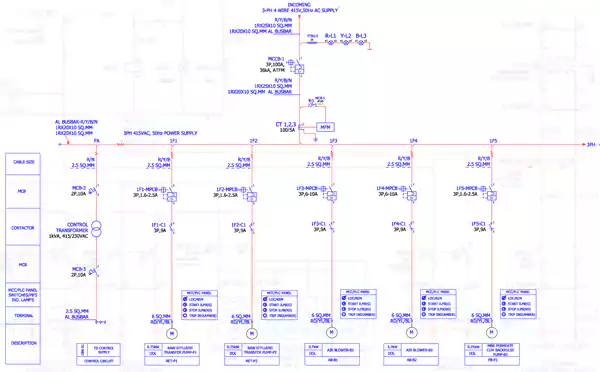
  • Single Line Diagram
  • Earthing Layout
  • Cable Trey Layout
  • Power Cable Schedule
  • Lighting Calculation
  • Lighting Layout
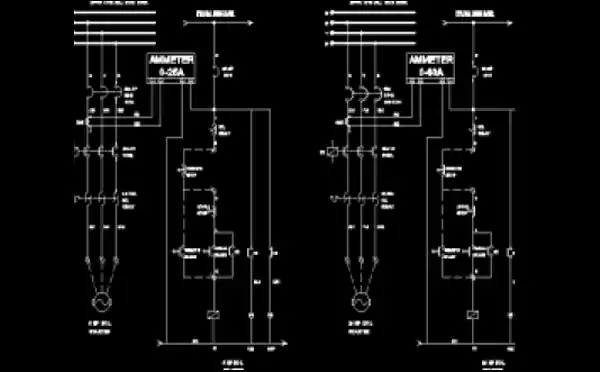
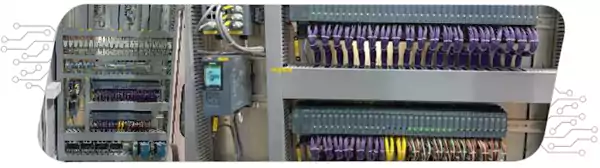
  • Control Panel Design & Construction
  • Supply, Commissioning, Operation & Maintenance of Control Panels

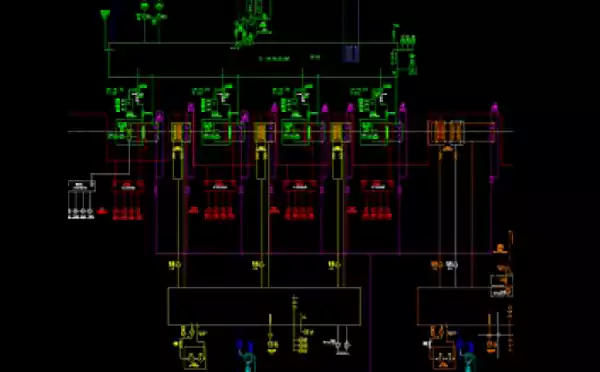
With the increasing complexity of electronic devices, computers have become imperative in electrical design, so we are designing electrical layouts by using E-plan & AutoCAD

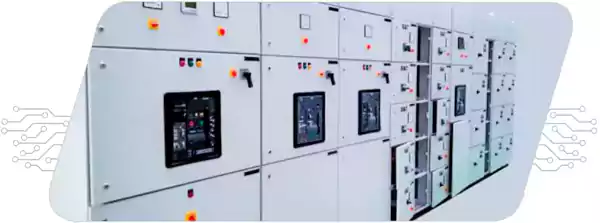
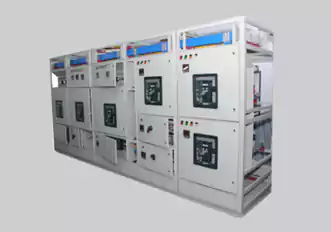
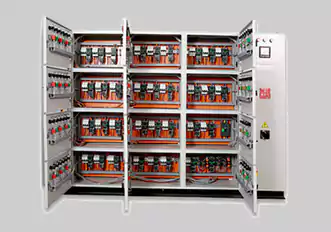
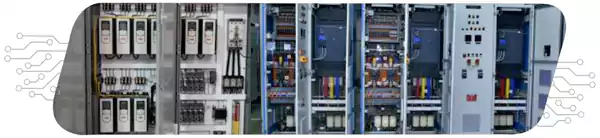
Owing to our expertise in this domain, we are engaged in offering a supreme quality PCC Panel that is used to supervise and control the voltage of power systems. Power Control Center panels for various industrial applications to provide reliable and effective distribution service. They are used to supervise and control the voltage and reactive power of the power system. The panels will undergo pretreatment for Decreasing, Water rinsing & De-rusting/ Phosphating, It will be painted with Powder Coated or Synthetic enamel as per the requirements Bus Bars I Internal Wiring uniform cross section and supported by SMC / DMC bases. Earthing Bus Bars will be running all along the Panel.

A Power Control Center Panel (PCC) is a type of electrical switchboard that houses circuit breakers, fuses, isolators, busbars, protection relays, and monitoring devices. It manages the main power supply, ensuring that electrical loads are distributed safely and efficiently.

  • Main Components of a PCC Panel
  • Component Function
    Incoming Breaker Controls the incoming power supply from the source
    Busbars Distribute power internally within the panel
    Outgoing Feeders Send power to different sub-panels, machines, or distribution boards
    Meters & Relays Monitor power usage and ensure protection against faults
    Circuit Breakers Protect individual circuits from overloads or short circuits
    Control Wiring Facilitates automation, signaling, and communication
    PLC or Relay Logic (optional) For automation and control logic.
  • Applications
  • Manufacturing plants
  • Commercial complexes
  • Hospitals
  • Data centers
  • Utilities and substations
  • Oil & gas industries
  • Protections in PCC Panels
  • Overload protection
  • Short circuit protection
  • Earth fault protection
  • Under / over voltage protection
  • Phase failure protection
  • Standards & Compliance
  • ISO 9001
  • CPRI Approved
  • Features in PCC Panels
  • Rated for high current (up to 6300A or more)
  • Can be modular, floor-standing, or wall-mounted
  • Available with manual or automatic control
  • Can include SCADA or PLC integration for automation
  • Designed for easy maintenance and safety.
  • Benefits of PCC Panels
  • Centralized power management
  • Enhanced safety and fault protection
  • Reduced downtime with quick fault isolation
  • Flexibility for future load expansion
  • Real-time monitoring and control
  • Supply OF PCC panel with a capacity of up to 6300 Amperes & constructed with a focus on robustness and durability.
  • Capable of maintaining a fault level of up to 70 kA.
  • We provide bus coupler arrangements for efficient power distribution based on specific requirements.

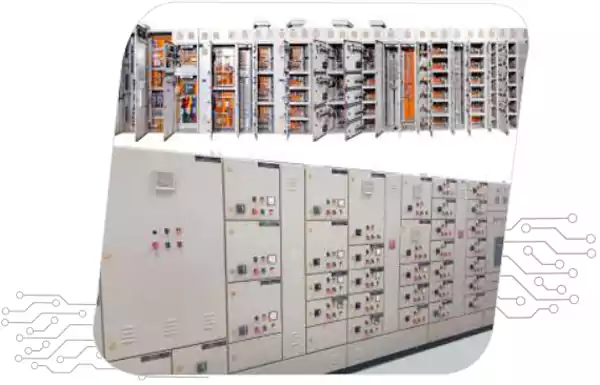
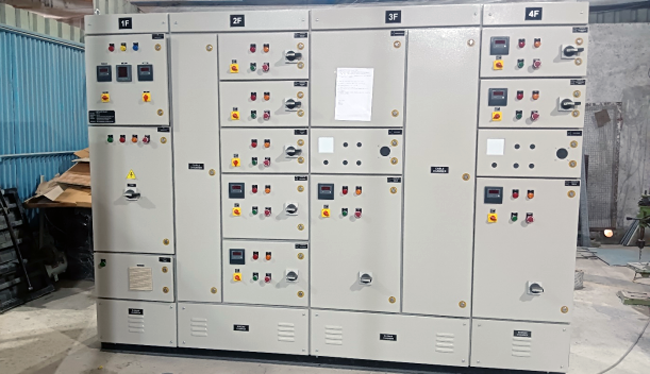
We design & manufacture low voltage switchgear panels & motor control center. Our in house design & good engi-neering practices in manufacturing combined together forms the ideal solution to the most demanding motor control applications throughout the industrial market. A motor controller is a device or group of devices that serves to govern in some predetermined manner the perfor-mance of an electric motor. A motor controller might include a manual or automatic means for starting and stopping the motor, selecting forward or reverse rotation, selecting and regulating the speed, regulating or limiting the torque, and protecting against overloads and faults. Every electric motor has a controller. The motor controller will have dif-fering features and complexity depending on the task that the motor will be performing on.

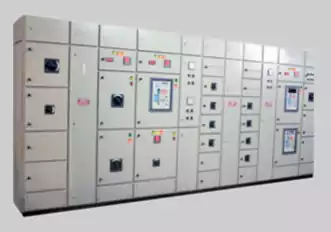
An MCC Panel, or Motor Control Center, is an electrical control panel used to control and manage electric motors in industrial or commercial environments.

  • Main Components of an MCC Panels
  • Component Function
    Incoming Breaker/Isolator Main power supply breaker for the entire MCC.
    Contactor Switches the motor ON/OFF remotely or automatically.
    Overload Relay Protects motor from overcurrent and overheating.
    MCB/MCCB Provides short-circuit and overload protection.
    Busbars Distribute power to all outgoing feeders/motor circuits.
    Control Circuit Includes push buttons, selector switches, indication lamps, timers, etc.
    PLC or Relay Logic (optional) For automation and control logic.
    Meters For monitoring voltage, current, power, Power factor, etc.
    VFD (Variable Frequency Drive) - Optional For speed control of motors
  • Motor Starter Types Used in MCCs
  • DOL (Direct-On-Line) Starter
  • Star-Delta Starter
  • Soft Starter
  • Variable Frequency Drive (VFD)
  • Auto Transformer Starter
  • Applications
  • Manufacturing units
  • Water treatment plants
  • HVAC systems
  • Oil & gas refineries
  • Mining operations
  • Process Industries
  • Pharmaceutical industries
  • Protections in MCC Panels
  • Overload protection
  • Short circuit protection
  • Earth fault protection
  • Under / over voltage protection
  • Phase reversal / failure protection
  • Standards & Compliance
  • ISO 9001
  • CPRI Approved
  • Benefits of MCC Panels
  • Centralized motor control
  • Enhanced operational safety
  • Simplified wiring and maintenance
  • Improved process control and automation
  • Reduces downtime through effective fault diagnosis
  • Equipped for seamless integration with DCS/SCADA/PLC systems
  • Adapts to diverse cable entry points, including top, bottom, or a blend of both, offering choices for front or rear access. Additionally, it provides a hybrid solution, allowing any combination of forms and types.
  • CNC construction
  • Safe and reliable operation
  • Labelled and colour coded wiring
  • 3D-CAD (Auto-CAD & E-Plan Design)
  • Easy operation
  • Controlling heavy starting currents

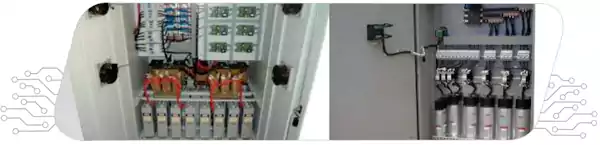
Designed with the concept of modularity which allows upgrading of kVAR rating as and when required. Advanced microprocessor based relay used to ensure real time power factor correction in the installation Current limiting contractors are used which are specially designed for capacitor switch. They are used to Supervise and Control the voltage and reactive power of the power system. We manufacture and supply a qualitative range of APFC panels, that are extensively used in various industries. These automatic power factor control panel are designed and developed using advanced techniques and are capable of saving maximum power and energy. These APFC Panel are highly efficient and accurately monitor the re-active power in power systems for saving energy and can alter the system voltage as well as current.

An APFC Panel (Automatic Power Factor Control Panel) is an electrical control panel used to improve the power factor of electrical systems by automatically switching capacitor banks in or out, depending on the load requirements. It helps reduce energy losses, avoid power factor penalties, and increase energy efficiency.

  • Main Components of an APFC Panels
  • Component Function
    APFC Relay / Controller Measures PF and triggers capacitor switching based on load demand
    Capacitor Banks Provide reactive power compensation
    Contactor / Thyristor Switches Switch capacitors ON/OFF (contactors for stepped; thyristors for dynamic loads)
    MCBs / MCCBs Provide circuit protection
    CTs (Current Transformers) Measure current for PF calculation
    HRC Fuses Protect capacitor banks from faults
    Cooling Fans Maintain temperature inside the panel
    Meters and Indicators Display voltage, current, PF, etc.
  • What is Power Factor?
  • Power Factor (PF) is the ratio of real power (kW) to apparent power (kVA).
  • A low PF leads to higher demand charges and inefficiencies in the electrical system.
  • Utilities often charge penalties for poor power factor (typically < 0.9 or 0.95).
  • What is an APFC Panel?
  • An APFC panel monitors the power factor using a power factor controller and automatically switches capacitor banks to maintain the desired PF level. It eliminates the need for manual intervention and ensures optimized reactive power compensation.
  • Working Principle
  • The APFC relay continuously monitors power factor using inputs from CTs and meters.
  • When the PF drops below the set value (e.g., 0.95), the relay signals contactors or thyristor modules to add capacitor banks.
  • When PF is too high or load reduces, the relay disconnects capacitors to prevent overcorrection.
  • This automated process ensures optimal power factor at all times.
  • Protections in APFC Panels
  • Overvoltage/undervoltage protection
  • Harmonic suppression (optional)
  • Capacitor over-temperature protection
  • Auto / manual mode selection
  • Step delay and switching time control
  • Benefits of APFC Panels
  • Avoids power factor penalties from utility companies
  • Reduces kVA demand and electricity bills
  • Improves energy efficiency of the system
  • Enhances voltage regulation and system stability
  • Increases capacity of existing electrical infrastructure
  • Applications
  • Commercial buildings
  • Industries with inductive loads (motors, transformers)
  • Hospitals and data centers
  • Shopping malls
  • Manufacturing plants
  • Ensure precise power factor correction in the systems
  • Can include detuned filters to control hamonics
  • Provides protection against high inrush current during switching
  • Modular to upgrade, up to 500 KVAR
  • Capacitors : L&T, ABB, Epcos, Subhodhan, Shreem
  • IVt* PF controllers : Epcos, L&T, Schneider
  • Thyristorised or contactor based Designed with the concept of modularity.
  • Easiness in operation, very low manual intervention
  • Avoid power factor penalty.

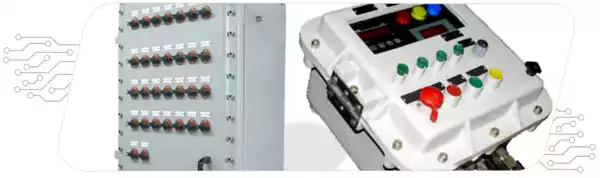
  • We are recognized as leading manufacturers and suppliers of a comprehensive range of explosion-proof control panels
  • Leveraging our expertise, we specialize in the manufacturing and supply of a quality-approved range of flameproof control panels

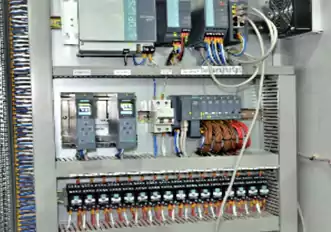
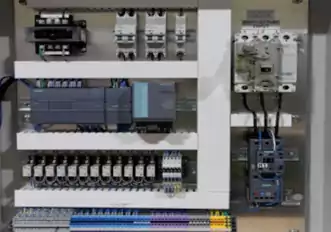
We are a reckoned organization engaged in manufacturing and supplying a comprehensive range of PLC Panels. These panels are highly appreciated for their longer functional life, easy installation and low maintenance. Our professionals make optimum utilization of the resources and develop excellent quality range of panels for the clients. Our professionals make sure to deliver effective range of panels

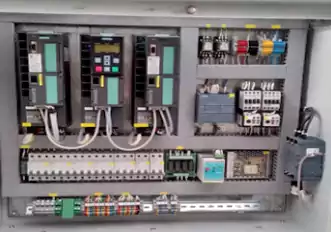
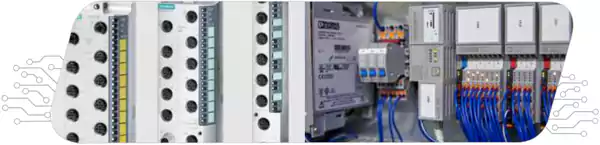
A PLC (Programmable Logic Controller) Panel or Automation Panel is an advanced electrical control panel that houses PLC systems, I/O modules, power supplies, and often HMIs (Human-Machine Interfaces). These panels are used to automate industrial processes by monitoring inputs, making logical decisions, and controlling outputs in real time.

  • Main Components of an PLC Panel
  • Component Function
    PLC CPU The processor that runs control logic
    I/O Modules (Digital & Analog) Interface for sensors and actuators
    Power Supply Provides 24VDC or other voltages for PLC and field devices
    Relays & Contactors Control high-power outputs
    MCCBs / MCBs Protection for incoming and outgoing circuits
    Terminal Blocks Organized wiring for input/output connections
    Communication Modules Modbus, Ethernet/IP, Profibus, etc., for SCADA or field communication
    HMI (Human-Machine Interface) Operator panel to monitor and control the system
    Cooling Fans / AC Units Maintain internal temperature
    Wiring Ducts & Labels Tidy, documented wiring for maintenance
  • Types of PLC Panels
  • Type Use Case
    Compact PLC Panels Small systems with limited I/O
    Modular PLC Panels Scalable systems with many I/O and multiple racks
    Distributed PLC Panels Provides 24VDC or other voltages for PLC and field devices
    SCADA-Integrated Panels Used in large systems; I/Os spread across locations and networked
    MCCBs / MCBs Includes communication with a central monitoring system
    Wiring Ducts & Labels Tidy, documented wiring for maintenance
  • What is a PLC Panel?
  • A PLC Panel is the brain of an automated system. It receives signals from sensors (inputs), processes them based on the programmed logic, and controls actuators (outputs) accordingly. It replaces traditional relay-based logic with software-based control
  • How PLC panel works?
  • Inputs (e.g., sensors, pushbuttons, level switches) send signals to PLC input modules.
  • The CPU processes these inputs using pre-programmed logic (ladder logic, STL, etc.).
  • Based on logic, it activates or deactivates outputs (e.g., motors, solenoids, alarms).
  • HMI or SCADA displays system status and allows manual control or monitoring.
  • Communication protocols ensure interaction with other systems or remote-control rooms.
  • PLC Panel Programming Languages
  • Ladder Logic (LD) - most common
  • Structured Text (ST)
  • Function Block Diagram (FBD)
  • Instruction List (IL)
  • Sequential Function Chart (SFC)
  • Benefits of PLC/Automation Panels
  • Precision and speed in process control
  • Easy troubleshooting and maintenance
  • Remote control and monitoring
  • Energy-efficient operation
  • Modular design makes upgrades easy
  • Integration with HMI, SCADA, MES, ERP systems
  • Common PLC Brands & Platforms
  • Siemens (S7-1200, S7-1500, LOGO)
  • Allen Bradley / Rockwell Automation (MicroLogix, CompactLogix, ControlLogix)
  • Schneider Electric (Modicon series)
  • Mitsubishi Electric
  • Omron
  • Delta, ABB, Honeywell (for specific applications)
  • Protections and Safety Features
  • Short circuit and overload protection (MCBs/MCCBs)
  • Overvoltage protection (SPDs)
  • Emergency stop circuitry
  • Isolators for maintenance safety
  • Password-protected access in HMI/PLC
  • Panel interlocks
  • Applications
  • Process industries (oil & gas, chemicals, pharmaceuticals)
  • Water treatment plants
  • Packaging & bottling lines
  • HVAC automation
  • Machine automation (CNCs, robotic arms)
  • Material handling systems (conveyors, sorters)
  • Building management systems (BMS)
  • We supply PLC panels equipped with hardware from reputable manufacturers, including Siemens, Rockwell Automation, Delta, Mitsubishi, Fuji, Selec, GE Fanuc, Schneider Electric, ABB, and RENU, based on customer recommendations.
  • In addition, we provide third-party communication solutions for data handshaking and ensure compatibility with Industrial Building Management System (IBMS) communication protocols. These protocols include TCP/IP, Profinet, Profibus, Modbus, CC-Link, Fieldbus, DeviceNet, and ControlNet.
  • Integrated with PLC, HMI, Barriers, VFD etc.
  • HMI's with screen size 3.5' to 22"
  • PLC's from siemens / AB / Delta / Mitsubishi / ABB / Schneider / Delta, etc.
  • Desk type I Floor standing / Wall mount
  • Customised as per requirement

An MCC panel, or Motor Control Center, is an electrical control panel used to control and manage electric motors in industrial or commercial environments.

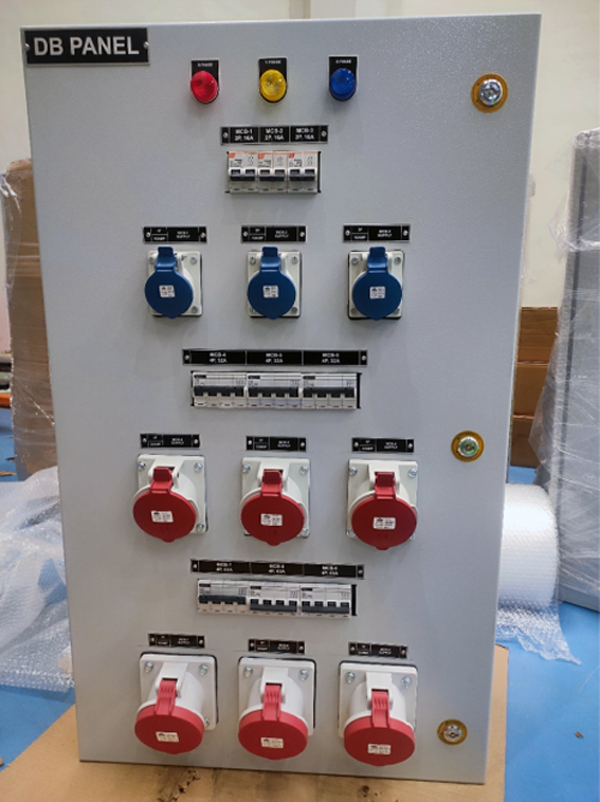
  • Main Components of an DB Panel
  • Component Function
    Main Incomer (MCB/MCCB/Isolator) Controls power input to the DB
    Outgoing MCBs Control and protect individual circuits.
    RCCB/ELCB/RCBO Provide earth leakage protection
    Busbars Distribute power to all MCBs
    Neutral & Earth Terminals For return current and grounding
    Enclosure Protects the panel; rated by IP standards
    Indicators Phase indication lamps (optional)
    Meters Optional for sub-metering of circuits
    Energy Meters Mounted on the wall surface
  • Types of DB Panel
  • Type Use Case
    Single-phase DB Residential homes, small offices
    TPN (Triple Pole + Neutral) DB Larger buildings, industries
    SPN (Single Pole + Neutral) DB For distributing three-phase + neutral to loads
    Vertical DBs Single-phase supply to lighting and sockets
    Flush-mounted DB Concealed wall installations
    Surface-mounted DB Mounted on the wall surface
  • Purpose of a Distribution Board
  • Distribute incoming power to multiple outgoing circuits
  • Provide circuit protection (overload, short circuit, earth fault)
  • Allow individual circuit control and isolation
  • Support metering and monitoring (optional)
  • Enable safe and organized wiring
  • DB Sizing and Design Considerations
  • Load Calculation
  • Number of Circuits
  • Current Rating
  • Short Circuit Rating
  • IP Rating
  • Wire Size & Terminal Capacity
  • Earthing & Neutral Busbars
  • Future Expansion
  • Protections Provided by DB Panels
  • Overcurrent protection - via MCBs or MCCBs
  • Short-circuit protection
  • Earth fault/leakage protection - via RCCBs or RCBOs
  • Surge protection (optional)
  • Isolating the faulty circuit without affecting others
  • Advantages of a Well-Designed DB
  • Ensures electrical safety
  • Modular and scalable
  • Easy maintenance and troubleshooting
  • Helps in load management
  • Enables zoning of circuits for better control
  • Applications
  • Residential homes
  • Commercial buildings (offices, malls)
  • Industrial facilities (as sub-panels)
  • Schools, hospitals, hotels Infrastructure (airports, metros, etc.)

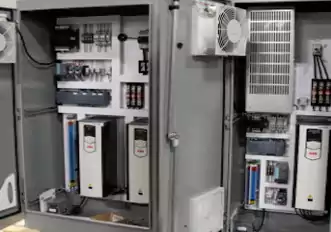
VFD Panels are designed to control the speed and torque of electric motors by varying input frequency and voltage to motors. VFD Panels are used as energy saving devices as they adjust motor speed under no load conditions or as required by the process. Such energy cost savings are especially pronounced in variable torque centrifugal fan and pump applications where there is large power reduction for a relatively small reduction in speed. We design and manufacture a diverse range of VFD panels for varied applications (closed-loop and open-loop applications).

A VFD Panel (Variable Frequency Drive Panel) is an electrical control panel that houses a VFD (Variable Frequency Drive) used to control the speed and torque of AC motors by varying the frequency and voltage supplied to the motor. It offers precise motor control, energy savings, and reduced mechanical stress on equipment.

  • Main Components of an VFD Panel
  • Component Function
    VFD (Drive Unit) Converts fixed AC to variable AC for motor speed control
    Input MCCB/MCB Protects the panel from overcurrent or short circuits
    EMI/RFI Filters Reduce electrical noise and harmonics
    Line Reactors / AC Chokes Protect VFD and reduce harmonics on input side
    Output Reactors Protect motor winding and VFD from voltage spikes
    Bypass Contactor (optional) Allows motor to run directly on mains in case of VFD failure
    Cooling Fan and Louvers Ensures proper heat dissipation
    HMI / Keypad Local control and monitoring of motor / VFD
    PLC / Control Relays For automation, interlocks, and remote operation
    Meters and Indicators Voltage, current, frequency, and fault status
    CTs & Energy Meters For monitoring and protection (optional)
  • Design Considerations
  • Design Parameter Notes
    Motor rating Converts fixed AC to variable AC for motor speed control
    Load type Protects the panel from over current or short circuits
    Cooling Reduce electrical noise and harmonics
    Panel type Protect VFD and reduce harmonics on input side
    Starting method Protect motor winding and VFD from voltage spikes
    Isolation Allows motor to run directly on mains in case of VFD failure
  • Working Principle
  • Incoming AC power is fed into the panel.
  • VFD converts it to DC using a rectifier, then back to AC at variable frequency and voltage via an inverter.
  • Output goes to the motor, allowing speed and torque control.
  • Control logic (manual, auto, PID) governs operation based on field signals or process needs.
  • Protections in VFD Panel
  • Overload / overcurrent
  • Short circuit
  • Overvoltage / undervoltage
  • Ground fault
  • Motor stall / jam detection
  • Phase loss / phase reversal
  • Overtemperature (drive and motor)
  • Protections in VFD Panels
  • Overload / overcurrent
  • Short circuit
  • Overvoltage / undervoltage
  • Ground fault
  • Motor stall / jam detection
  • Phase loss / phase reversal
  • Overtemperature (drive and motor)
  • Benefits of VFD Panels
  • Up to 60% energy savings in fan and pump applications
  • Soft start and stop reduce mechanical wear
  • Extended motor life and reduced maintenance
  • Precision in speed control improves process efficiency
  • Can reduce starting current up to 80% compared to DOL starters.
  • Standards & Compliance
  • ISO 9001
  • CPRI Approved
  • We offered VFD panels equipped with VFD drives from reputable manufacturers, including Siemens, ABB, Delta, Danfoss, Mitsubishi, Fuji, and Yaskawa, based on customer recommendations
  • Our range includes VFD panels ranging from 0.5HP to 400HP
  • Additionally, we offer independent communication to each VFD drive, connecting to PLC/DCS/SCADA through communication protocols such as TCP/IP, Profinet, Profibus, Modbus
  • Our VFD panels are tailored for various applications, including chiller, AHU, conveyor, blower, pump, and crane systems.
  • AHU / Chiller Control
  • Pump / Motor / Blower Speed Control
  • Reactor Control
  • Converyor / Crane System
  • Remote / Local / Bypass Control Options
  • 1-400 HP (0.7457KW-298.28KW) drive panel
  • Siemens / AB / Danfoss / Mitsubishi / ABB/ Yaskawa / Delta

  • Supplied up to 4000 lOs of Rio, including Siemens, Rockwell Automation, Delta, Mitsubishi, Fuji, Select, GE Fanuc, Schneider Electric, ABB, and RENU, based on customer recommendations
  • Provided third-party communication solutions for data handshaking with the main PLC system through communication protocols such as TCP/IP, Profinet, Profibus, Modbus, CC-Link, Fieldbus, DeviceNet, and ControlNet
  • Supplied field-mounted Rio panels for both FLP (Flameproof) and non-FLP areas

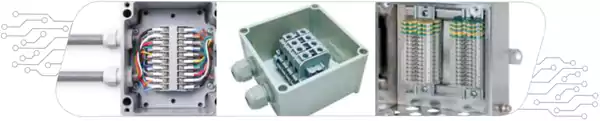
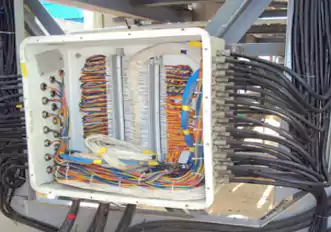
Leveraging on our state-of-infrastructure, we are able to present Junction Boxes. These products are accessible for the customers in distinctive sizes and measurements, with a mean to suit their varied demands. Offered products are easy to install and maintenance freethat increase their demand in the market. In order to meet varied demands of our customers, we are offering quality assured Power Distribution Boxes. These products are profoundly acknowl-edged in electric wiring in household and business places. These distribution boxes are made up of quality assured parts and sophisticated technology. Our expert's team designed these distribution boxes by utilizing their skills and years of experience.

  • SS316 / SS304 / MS Powder Coated Gasketed Trims
  • FLP Junction Boxes
  • Aluminium / Copper Busbar JB
  • Aluminium / Copper Bus Option

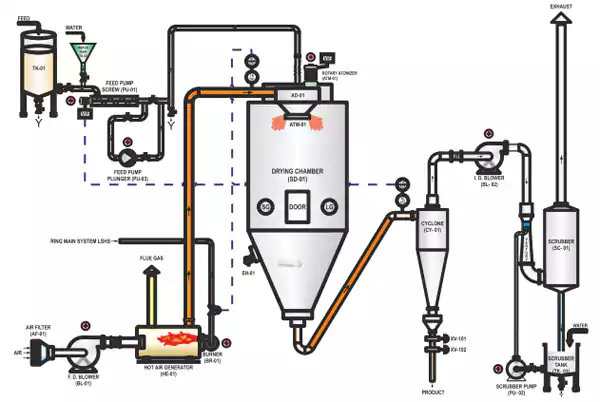
  • The MIMIC panel is employed to visually represent the process flow on a mimic of the plant
  • It is strategically positioned on the panel door for convenient visualization
  • A customized P&ID (Process and Instrumentation Diagram) is designed specifically for the creation of the mimic on the panel. The design is tailored to meet the specific process requirements
  • Relay-based control panels provide interlocking functionality through hardwiring